
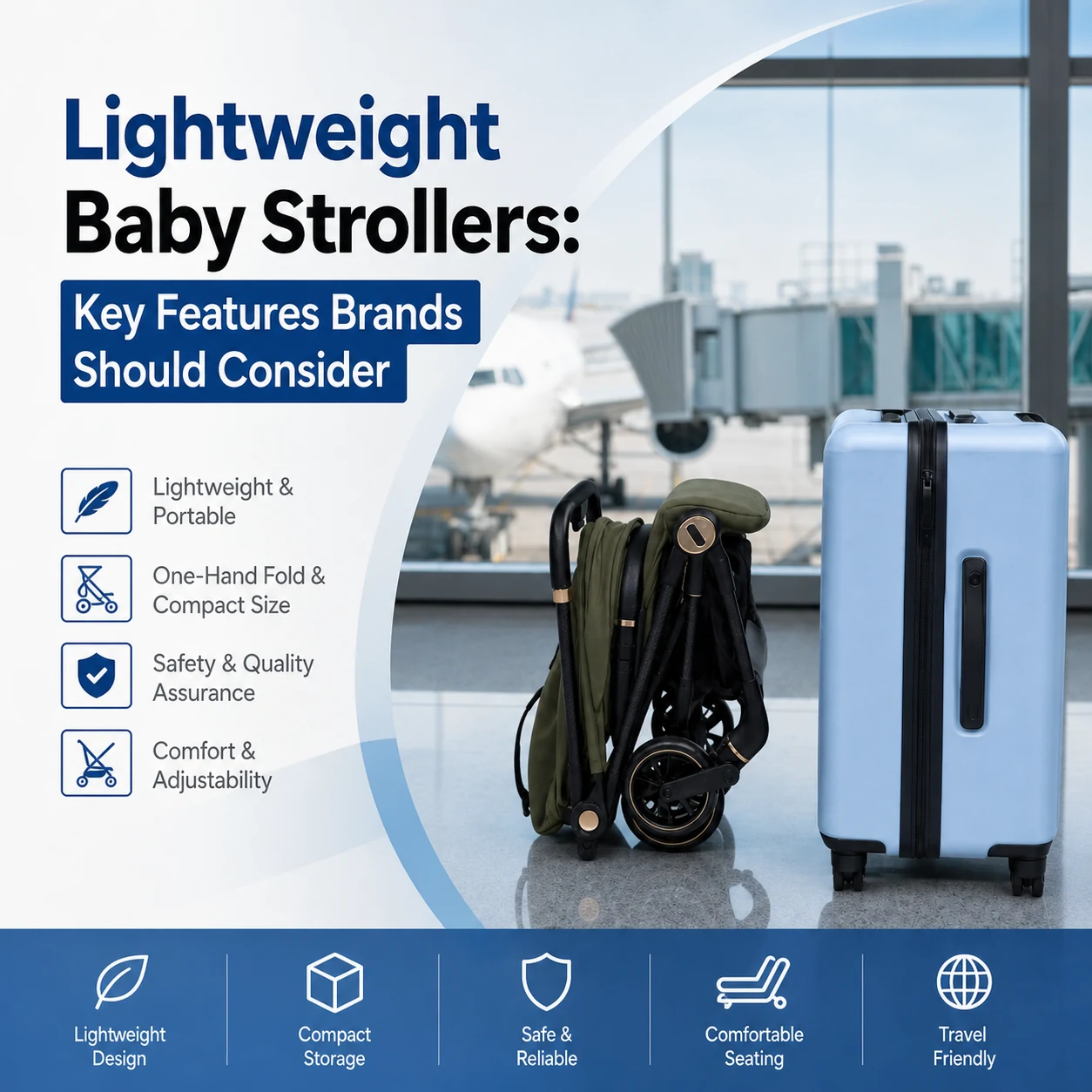
Lightweight baby strollers have become an important product category for families looking for convenient ways to travel, shop, and move around their daily environments. For baby product brands, importers, and wholesalers, developing or sourcing the right lightweight stroller involves more than reducing the overall weight. Folding convenience, structural design, child comfort, safety requirements, and product positioning all influence whether a model fits its intended market.
A well-designed lightweight stroller should balance portability with practical everyday functionality. For manufacturers, this means considering how individual components work together, from the frame and folding mechanism to the seat, wheels, and braking system.
This guide explores the key features brands should evaluate when selecting lightweight baby strollers and explains how these considerations can support product development and OEM/ODM projects.
1. Weight and Portability
Weight is one of the first specifications buyers consider when evaluating a lightweight baby stroller. A lighter stroller can be easier to lift into a car, carry up stairs, store at home, or manage while traveling with a child.
However, a low net weight should not be the only selection criterion. Brands also need to consider the stroller's intended age range, load capacity, structural stability, and everyday usability.
Finding the Right Balance
Reducing weight requires careful decisions about the frame, seat structure, wheels, connectors, and other components. Each element contributes to the overall design, and changing one component may affect other aspects of the product.
For example, a stroller designed primarily for short trips and public transportation may prioritize compact dimensions and easy handling. A model intended for more frequent everyday use may require a different balance between portability, seat comfort, storage space, and wheel performance.
When comparing suppliers, brands should review the complete product specification rather than relying on weight alone. It is also useful to clarify whether the stated weight includes accessories such as a bumper bar, cup holder, or other removable components.
2. Folding Mechanism and Folded Size
A convenient folding mechanism is another defining feature of a lightweight stroller. For parents who frequently travel or have limited storage space, the ability to fold a stroller quickly and manage it with one hand can make a meaningful difference.
One-Hand Folding and Compact Storage
Depending on the model, folding designs may include one-hand operation, one-step folding, gravity-assisted folding, or mechanisms that allow the stroller to stand independently when folded.
These features should be evaluated in practical use. Brands can consider whether the folding sequence is intuitive, whether the mechanism operates consistently, and whether the folded stroller is easy to lift and store.
Folded dimensions are equally important. A stroller may have a low net weight but still take up considerable space when folded. Buyers should compare the folded length, width, and height with the storage requirements of their target customers.
For travel-oriented products, compact dimensions can also be a useful selling point. However, cabin baggage requirements vary between airlines and aircraft, so a compact stroller should not automatically be described as suitable for every airline's overhead compartment.
Self-Standing Design
Some folding strollers are designed to remain upright when folded. This can make storage more convenient in homes, shops, and other environments where floor space is limited.
For product evaluation, brands should check the folded stroller's stability and whether the self-standing function works reliably on an appropriate flat surface.
3. Frame Materials and Structural Design
Frame material affects a stroller's weight, appearance, structural properties, manufacturing process, and cost. Selecting the right material therefore requires more than comparing the weight of individual tubes.
Common Frame Material Considerations
Aluminum is widely used in lightweight stroller designs because it offers a practical balance of weight, structural properties, and manufacturability. Its suitability depends on the selected alloy, tube dimensions, frame geometry, joining methods, and overall engineering.
Carbon fiber is another option for lightweight product development. Its properties can support designs where reducing frame weight is an important objective, although material cost, connection design, manufacturing requirements, and repair considerations also need to be evaluated.
Steel may also be appropriate for selected components or designs where its mechanical properties and cost characteristics fit the product requirements.
No single material is automatically the best choice for every stroller. The right option depends on the target price range, intended use, design requirements, and applicable safety and performance criteria.
A Carbon Fiber Lightweight Stroller Example
At LeShu, a carbon fiber lightweight stroller provides a practical example of how material selection can be combined with folding convenience.
The model has a net weight of 5.1 kg and uses carbon fiber tubes. It supports one-hand, one-button folding, and its folded volume is smaller than that of a typical 20-inch suitcase.
These features are relevant to brands exploring compact travel-oriented stroller designs. The combination of a lightweight frame and a compact folding structure can help address portability requirements without making weight the only focus of product development.
For buyers considering a similar concept, further evaluation should include the complete frame structure, folding mechanism, component connections, stability, durability, and relevant test results. Material selection should always be assessed as part of the complete stroller design rather than in isolation.
4. Seat Comfort and Adjustability
Portability is important, but a lightweight stroller must also provide an appropriate seating environment for the child. Seat design, backrest adjustment, footrest support, canopy coverage, and ventilation can all influence the product's intended use.
Backrest and Footrest Adjustment
Some lightweight strollers offer multiple backrest positions, allowing the seat to be adjusted for different activities. A recline function may be useful for resting, while a more upright position can suit other everyday situations.
The available adjustment range varies by model. Brands should verify the actual recline angle, adjustment mechanism, seat dimensions, and intended age range before describing these features in product listings.
A footrest can also contribute to seating comfort, particularly as a child grows. Its position and adjustment range should be considered alongside the seat depth and backrest design.
For newborn use, buyers need to confirm that the specific stroller is designed and approved for that purpose. A reclining seat alone does not establish that a stroller is suitable for newborns. Any required carrycot, infant accessory, or other configuration should be assessed against the manufacturer's instructions and applicable requirements.
Canopy and Fabric
A canopy can help provide shade, while additional coverage or ventilation features may improve practicality in different climates.
Fabric selection also affects product appearance, tactile feel, cleaning requirements, and overall positioning. Depending on the model and project, brands may explore different colors, fabric options, and selected material specifications.
During product development, these choices should be assessed for suitability, durability, care instructions, and relevant chemical or material safety requirements.
5. Wheels, Suspension, and Braking
A lightweight stroller's handling depends on the interaction between its wheels, frame, suspension, weight distribution, and steering design.
Wheel Configuration and Maneuverability
Wheel diameter, tread design, material, and front-wheel configuration can affect how a stroller performs on different surfaces. Smaller wheels may suit compact urban designs, while other configurations may be considered for products intended for a broader range of everyday environments.
The most suitable arrangement depends on the intended application. Buyers should evaluate turning performance, steering response, and handling on surfaces that reflect the product's intended use.
Suspension may help reduce the effects of certain surface irregularities, but its performance depends on the complete wheel and frame system. Brands should avoid assuming that a stroller with suspension will perform equally well on every terrain.
Braking and Stability
The braking system is a critical part of stroller design. Depending on the model, it may include a rear-wheel brake or a linked braking mechanism.
When evaluating a stroller, buyers should review brake accessibility, engagement and release, stability when parked, and the relevant test results. These aspects should be considered together with the product's structural design and intended operating conditions.
Portability should never replace appropriate safety evaluation. A lightweight stroller still needs to meet the requirements applicable to its intended market and product category.
6. Safety Standards and Market Requirements
Safety and regulatory compliance are essential considerations when sourcing baby strollers for international markets. Requirements can differ by country or region, and the applicable standard depends on the product type, intended use, and market regulations.
For example, EN 1888 is a relevant European stroller standard series, while ASTM standards include requirements and test methods for particular juvenile products and applications in the United States. The specific edition, scope, and applicability must be checked for the product being sourced.
Brands should confirm the applicable requirements before finalizing product specifications or making compliance claims.
What Buyers Should Review
When assessing a manufacturer's quality and compliance arrangements, buyers can ask about:
Applicable product standards and test requirements for the destination market.
Available test reports and their relevance to the specific model.
Frame strength, durability, folding mechanisms, and locking features.
Restraint systems, brakes, stability, and other relevant safety-related components.
Material specifications and applicable chemical safety requirements.
Inspection procedures and controls during mass production.
It is important to distinguish between a manufacturer's experience with particular standards and evidence that a specific product has passed the required tests. Buyers should verify the documentation for the actual model and configuration under consideration.
Early discussions about compliance can also help identify design changes that may be needed before sampling or bulk production.
7. Customization Opportunities for Baby Product Brands
For private-label brands, customization can help align a stroller with a defined customer group, retail channel, and product range. The extent of customization depends on the existing design, technical feasibility, order quantity, and project requirements.
Appearance and Branding
Common customization options may include frame colors, fabric colors, selected material choices, logo application, and packaging. These changes can help brands establish a consistent visual identity across their products.
When planning customization, buyers should consider how different materials and colors affect product appearance, production arrangements, and cost. Packaging should also be reviewed for product protection, shipping requirements, and the intended sales channel.
Functional and Structural Development
Some projects require more than appearance changes. Depending on the model and manufacturing feasibility, discussions may cover folding mechanisms, seat configurations, accessories, or selected structural features.
OEM manufacturing is generally suitable for customers who already have a defined design or specification and need a manufacturing partner to produce it.
ODM projects may involve further product development, where customers work with a manufacturer to evaluate design concepts, material options, functions, and samples.
For both approaches, clear specifications and timely feedback are important. Before development begins, brands should communicate the target market, intended user group, required features, expected order quantity, target cost, and desired launch schedule.
8. How to Evaluate a Lightweight Stroller Manufacturer
Choosing a manufacturer involves evaluating more than a sample or initial quotation. Buyers should also consider production capability, quality management, communication, and the supplier's ability to support repeat orders.
Manufacturing Capacity and Quality Control
LeShu is a China-based baby and pet product manufacturer with nearly 15 years of industry experience in product development, manufacturing, and international sales.
The company profile lists a production site of approximately 56,000 square meters and four production lines. Current annual output and capacity figures remain pending confirmation.
For customers evaluating a stroller project, relevant discussions can include production planning, material sourcing, customization feasibility, sample development, and quality inspection arrangements. Actual lead times depend on the product, order volume, customization requirements, and production schedule.
Samples and Product Verification
A sample provides an opportunity to review the product before confirming a bulk order. Buyers should evaluate the folding operation, overall dimensions, handling, finishing, materials, and the features specified in the project brief.
For projects involving structural changes or different materials, the sample should reflect the intended production configuration as closely as practical. Any changes made after approval should be documented and reviewed before mass production.
It is also useful to agree on inspection criteria, packaging specifications, and the documentation required for the destination market.
A clear process for reviewing samples and confirming specifications can help both the buyer and manufacturer establish consistent expectations.
Conclusion
Selecting a lightweight baby stroller requires a balanced assessment of portability, folding convenience, frame materials, seating comfort, handling, safety, and customization possibilities.
For brands, importers, and wholesalers, the most suitable model is not necessarily the lightest one. It is the product that fits the intended customer, market requirements, target price range, and practical usage scenarios.
Working with a manufacturer early in the product evaluation process can help clarify specifications, review customization options, and identify relevant testing requirements before production begins.
LeShu supports baby product businesses with stroller manufacturing and OEM/ODM customization services. If you are evaluating a lightweight stroller for your brand, you can contact the LeShu team to discuss your target market, product requirements, and potential development project.
Frequently Asked Questions
What should brands look for in a lightweight baby stroller?
Brands should consider net weight, folded dimensions, folding convenience, frame materials, seat adjustability, wheel performance, braking, safety requirements, and the product's intended age range.
Are carbon fiber baby strollers lighter than other models?
Carbon fiber can support lightweight frame designs, but the overall weight depends on the complete stroller structure, including the seat, wheels, connectors, and other components. Buyers should compare complete product specifications rather than frame material alone.
Can a lightweight baby stroller be used as cabin luggage?
Some compact strollers are designed with air travel in mind. However, acceptance as cabin baggage depends on the stroller's folded dimensions, the airline's current rules, and aircraft-specific restrictions. Buyers should verify these requirements before making a cabin-luggage claim.
Can baby stroller manufacturers customize products for private-label brands?
Depending on the model and project requirements, OEM/ODM customization may include colors, fabrics, logos, packaging, accessories, and selected functional or structural features. Minimum order quantities and technical feasibility should be confirmed with the manufacturer.
What safety standards should buyers check when sourcing baby strollers?
Buyers should identify the standards and regulatory requirements applicable to their destination market and specific stroller model. EN 1888 and relevant ASTM standards may be applicable in certain markets, but the required edition, scope, and product-specific test documentation should be verified.
What information should buyers provide when requesting a stroller sample?
Useful information includes the target market, intended age range, preferred stroller type, key functions, customization requirements, estimated order quantity, target cost, and expected launch schedule. Reference images or technical drawings can also help clarify the project.